— Some Hero Frames & Assets
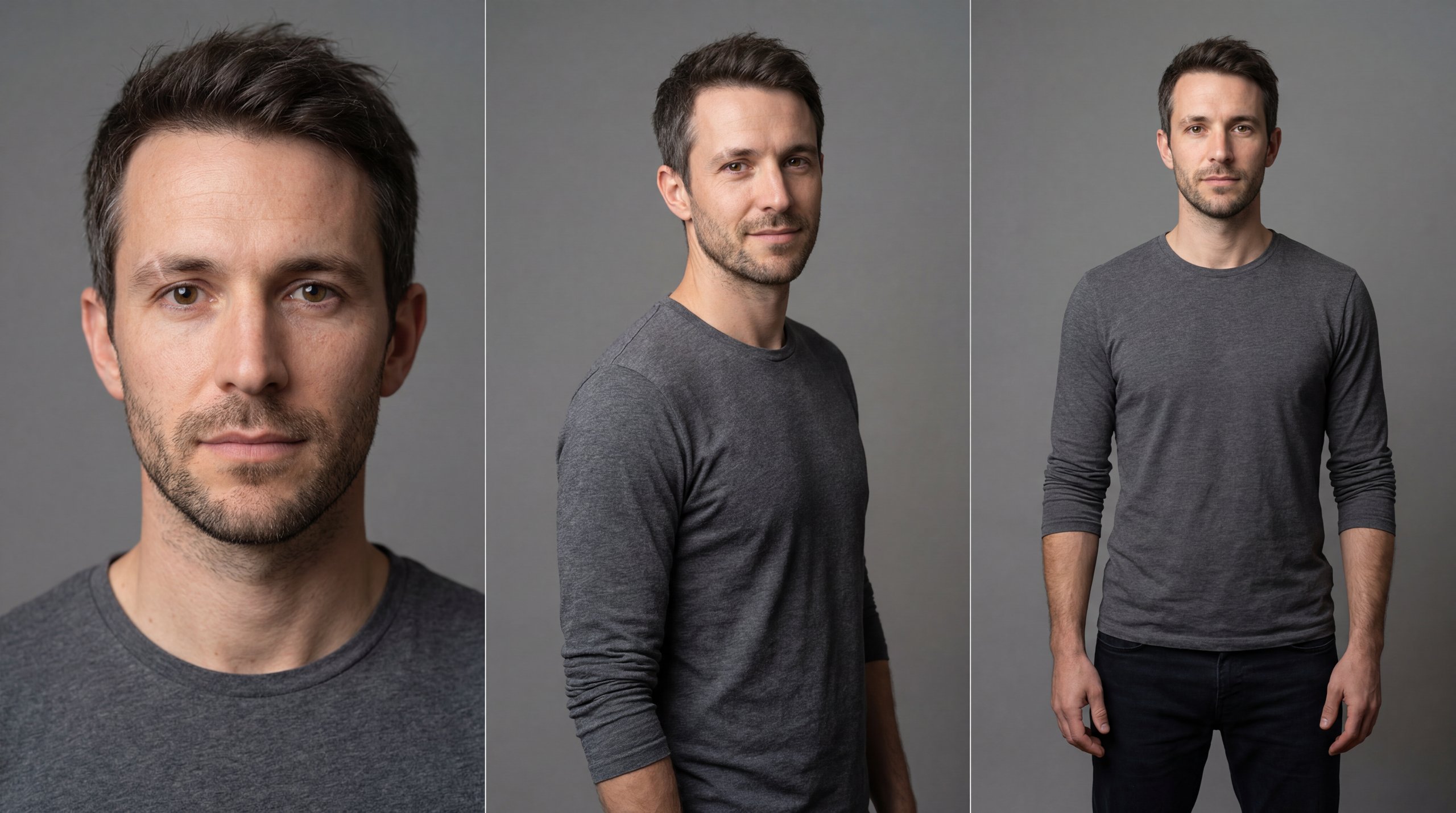
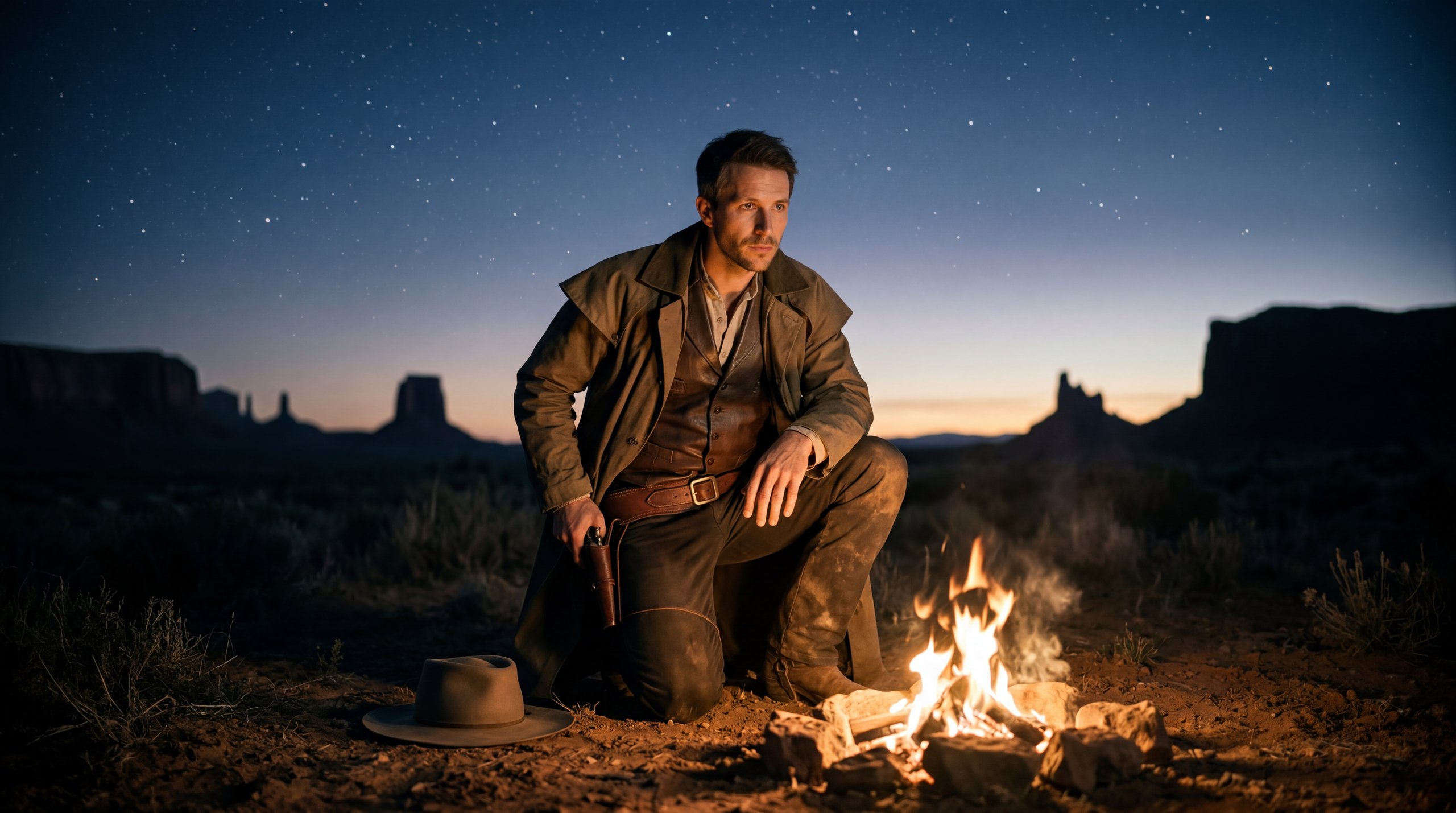
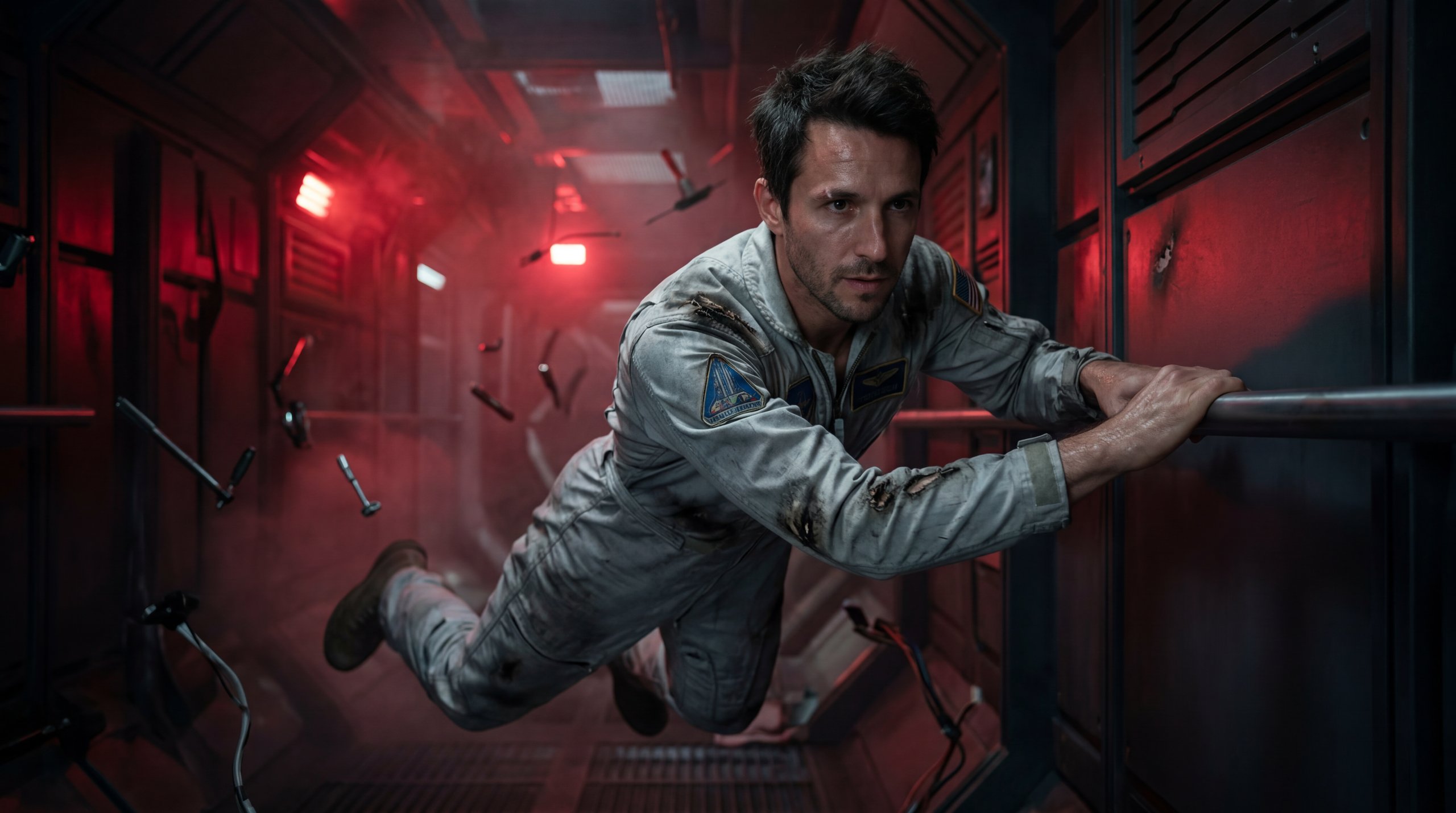
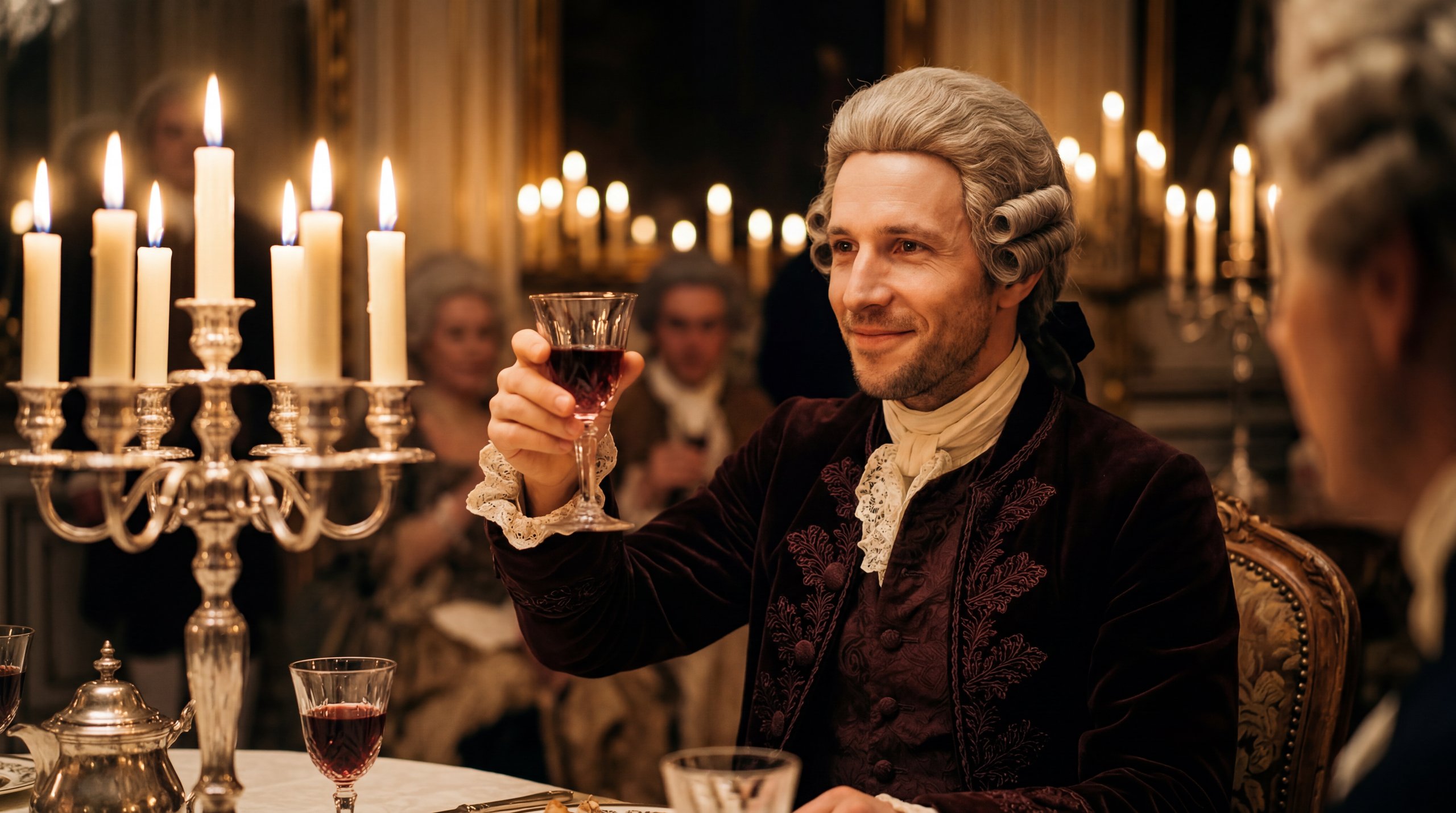
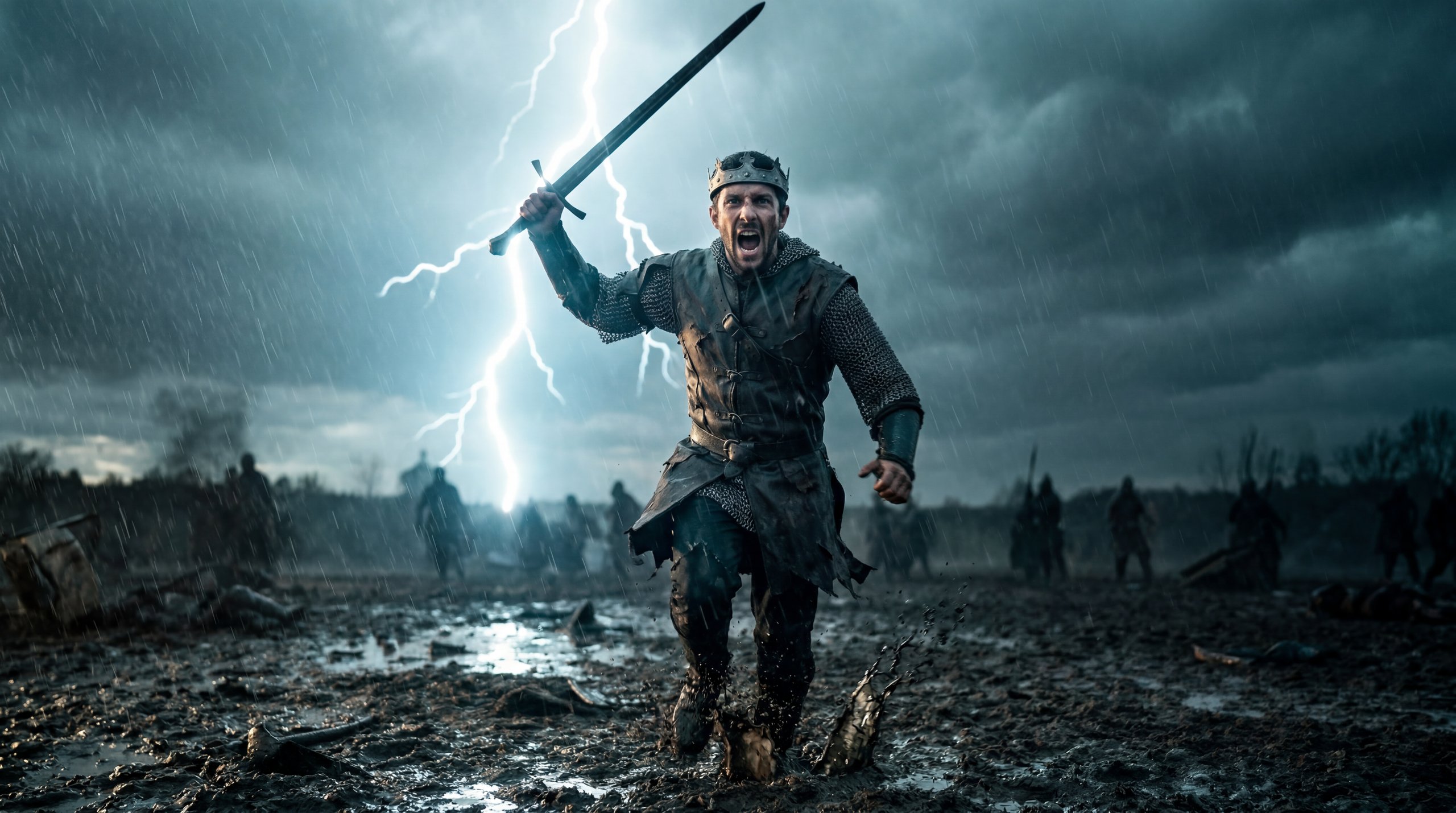

A face you don't recognise lives a hundred lives in two minutes — by a desert fire, in neon rain, on a battlefield, in a candlelit salon. Then the rhythm collapses inward, the same face turns to look at us, and the camera pulls back to reveal where it has really been all along.
The piece was built around a single hypothesis: that one face, repeated through impossible contexts, can carry an argument no voice-over could.
The dramatic weight had to live in what the viewer slowly notices — that no actor works across this many genres, periods and registers in a single reel. The only explanation for what they're watching is not casting, but creation.
The texture is intentionally loud — anamorphic flares in a cyberpunk alley, rain on chainmail, lightning over a charging warrior, candlelight on a hardening face — so that when the rhythm finally collapses and the white room arrives, the absence of cinematography reads as a rupture. No music underscores the turning point. The cut, the stillness, and a single steady gaze do the work.
The closing image is a study in invitation: not a product demonstration, not a victory lap — only someone at a desk, watching, and the quiet implication that the next reel could be theirs.